
Deal Hunting Explained: Smart Strategies to Save More Money
TL;DR:
- Deal hunting involves strategic research, comparison, timing, and tools to find the best prices.
- Using price trackers, alerts, and stacking discounts maximizes savings on major purchases.
- Timing sales cycles and recognizing deal types help shoppers buy at the most advantageous moments.
Most people think deal hunting is some extreme sport reserved for coupon-obsessed shoppers with spreadsheets and three hours to spare. That’s a myth. In reality, anyone can learn to hunt for deals effectively, and you don’t need to be an insider to do it. Whether you’re buying electronics, clothing, or household essentials, knowing how to find the best price before you buy can save you hundreds of dollars every year. This guide breaks down what deal hunting actually means, how it works in practice, and the strategies that make the biggest difference for everyday shoppers.
Table of Contents
- What is deal hunting? The basics explained
- How deal hunting works: Tools and strategies
- Types of deals you should know
- When to hunt for deals: Timing and seasonal patterns
- Deal hunting: What most advice gets wrong
- Start your deal-hunting journey with expert tools
- Frequently asked questions
Key Takeaways
| Point | Details |
|---|---|
| Deal hunting defined | Deal hunting means using smart strategies to find the best prices and avoid overpaying online. |
| Use the right tools | Leveraging price trackers, extensions, and timely alerts dramatically boosts savings. |
| Know deal types | Recognizing the main kinds of deals helps you spot true bargains and ignore fake offers. |
| Timing is critical | Shopping during major sale periods and tracking seasonal trends leads to bigger savings. |
| Strategy beats luck | A disciplined, strategic approach to deal hunting outperforms luck or random searching. |
What is deal hunting? The basics explained
Let’s get this straight from the start. Deal hunting is the practice of actively searching for the best possible price or offer before making a purchase. It’s not the same as casually clipping coupons or waiting around for a random sale email. It’s intentional, strategic, and surprisingly straightforward once you understand the core steps.
Deal hunting breaks down into four main activities:
- Research: Knowing what a product typically costs before you see a “sale” tag
- Comparison: Checking multiple retailers to find the lowest current price
- Timing: Buying when prices are at their lowest, not just when you feel like shopping
- Tools: Using apps, trackers, and alerts to automate the process
When you put those four things together, the results add up fast. You stop paying the “convenience tax” that retailers count on. You avoid that sinking feeling after buying something at full price, only to see it go on sale the next day. And honestly, shopping becomes more satisfying when you know you made a smart call.
There’s also a big myth worth busting: deal hunting is not just for people with unlimited free time. Modern tools have made it faster and simpler than ever. You can set up a price alert in under a minute. You can compare prices across dozens of stores in seconds. The barrier to entry is low, and the payoff is real.
“The best deal hunters aren’t the ones who spend the most time searching. They’re the ones who built the right habits and systems.”
Another misconception is that understanding online deals requires technical expertise. It doesn’t. The fundamentals are accessible to anyone who shops online, which at this point is nearly everyone. Once you learn the basics, deal hunting stops feeling like extra work and starts feeling like second nature.
How deal hunting works: Tools and strategies
Now that you know what deal hunting is, let’s talk about how to actually do it. The right tools make a massive difference, and must-have tools for deal hunters include browser extensions, price trackers, and cashback apps that can instantly surface discounts you’d otherwise miss.
Here’s a practical step-by-step approach:
- Identify the product you want to buy and note the price at the first store you find
- Use a price tracker to pull up the product’s price history and see if the current price is actually a good deal
- Compare prices across multiple retailers by comparing deals online using a comparison tool
- Stack discounts by combining a sale price with a coupon code and a cashback offer
- Set an alert so you’re notified if the price drops further before you’re ready to buy
Discount stacking is one of the most underused strategies. It means layering multiple types of savings on a single purchase. For example, a store might be running a 20% off sale. You find a coupon code for an extra 10% off. Then you use a cashback portal to earn 5% back on top. That’s a significant combined saving on what would have been a full-price purchase.
| Strategy | Effort level | Potential savings | Best for |
|---|---|---|---|
| Price tracker alerts | Low | High | Big-ticket items |
| Browser extensions | Very low | Medium | Everyday shopping |
| Cashback portals | Low | Medium | All purchases |
| Coupon stacking | Medium | High | Sales + promo events |
| Loyalty rewards | Very low | Low to medium | Repeat purchases |
Pro Tip: Don’t overlook cashback and reward programs. Platforms like cashback portals give you money back on purchases you’re already making. Combined with a sale price, this can turn a decent deal into a genuinely great one. You can also browse current online deals to see real-world examples of stacked discounts in action.
Types of deals you should know
Having the right tools is powerful, but knowing what types of deals to hunt makes you truly effective. Not every “sale” is a real sale. Retailers know how to create urgency and perception of value, and seven main deal types that every shopper should recognize include flash sales, coupon codes, bundle offers, seasonal discounts, loyalty rewards, free shipping thresholds, and clearance pricing.
Here’s a breakdown of the most common types and what to watch for:
- Flash sales: Limited-time offers, sometimes only hours long. Great when the discount is genuine, but often used to create panic buying. Always check the price history first.
- Coupon codes: Discount codes applied at checkout. Easy to find with a quick search. Stack them with other offers when possible.
- Bundle offers: Buy two items together for a lower combined price. Only worth it if you actually need both items.
- Loyalty rewards: Points or cashback earned through repeat purchases. Low effort, steady returns.
- Clearance pricing: End-of-line stock at deep discounts. Best for non-seasonal products where timing doesn’t matter.
- Seasonal discounts: Predictable price drops tied to holidays or shopping events. Plan ahead for maximum savings.
| Deal type | Real savings potential | Common trap | Best strategy |
|---|---|---|---|
| Flash sale | High | Inflated original price | Check price history |
| Coupon code | Medium | Minimum spend requirements | Stack with other offers |
| Bundle offer | Medium | Paying for extras you don’t need | Only buy what you’d buy anyway |
| Loyalty rewards | Low to medium | Encourages overspending | Use passively, don’t chase |
| Clearance | High | Limited sizes or options | Act fast on items you need |
Spotting a fake deal is a skill. If a price was “originally” $200 and is “now” $140, use a price history tool to verify. Often that $200 price was only listed for a single day before the “sale” launched. Knowing your common online deal types protects you from these tactics.

When to hunt for deals: Timing and seasonal patterns
Alongside knowing what types of deals exist, timing your hunt makes a huge difference in savings success. Maximizing savings depends on knowing when major sales and seasonal promotions happen throughout the year. Retailers don’t drop prices randomly. They follow predictable patterns tied to inventory cycles, holidays, and competitive pressure.
Here are the key annual periods every budget-conscious shopper should target:
- Black Friday and Cyber Monday (late November): The biggest sale event of the year across almost every category
- January clearance sales: Retailers offload holiday inventory at steep discounts
- Back-to-school season (July to August): Electronics, clothing, and supplies see reliable price drops
- Prime Day and competing events (mid-July): Major online retailers run site-wide discounts simultaneously
- End-of-season clothing sales (February and August): Fashion inventory is cleared at 50 to 70% off
- Memorial Day and Labor Day (May and September): Big discounts on appliances, furniture, and outdoor gear
- New product launches: When a new model releases, the previous version drops significantly in price
Understanding retail sales cycles gives you an edge. Retailers plan these promotions months in advance. You can plan ahead too. If you know you’ll need a new laptop in the fall, wait for a back-to-school sale. If you want a new TV, Black Friday is almost always your best window.
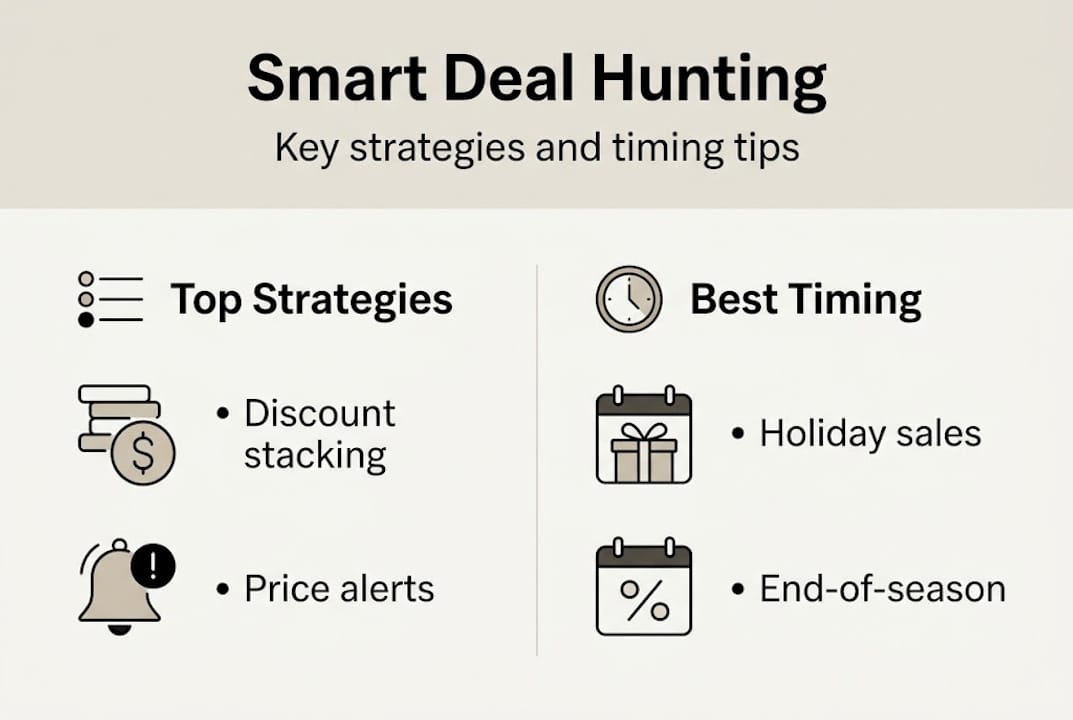
Seasonal patterns also mean you can apply seasonal discount strategies throughout the entire year, not just during the obvious holidays. And by monitoring seasonal sales with automated tools, you won’t need to remember every date manually.
Pro Tip: Set calendar reminders for key sale dates two weeks in advance. This gives you time to research products and compare baseline prices before the hype starts, so you can instantly recognize a genuine discount when it appears.
Deal hunting: What most advice gets wrong
Here’s something most deal-hunting guides won’t tell you. Obsessing over small discounts is often a waste of energy. Spending 40 minutes hunting for a $2 coupon on a $15 item is not strategic. It’s a trap. The real wins in deal hunting come from applying bargain hunting frameworks to bigger purchases and using timing as your primary weapon.
There’s a meaningful difference between chasing deals and strategic purchasing. Chasing deals means reacting to every promotion you see. Strategic purchasing means deciding what you need, understanding its price patterns, and buying at the right moment. One leads to impulse buys. The other leads to genuine savings.
Focus your deal-hunting energy where it counts. Big-ticket items like electronics, appliances, and furniture are where disciplined timing and price tracking deliver the most value. A 15% discount on a $500 item is worth real effort. A 15% discount on a $12 item is not. Make deal hunting a deliberate part of your purchasing process, not a last-minute afterthought, and the savings will follow naturally.
Start your deal-hunting journey with expert tools
Ready to apply what you’ve learned about deal hunting? The strategies in this guide are powerful, but they work even better when you have the right system supporting them.
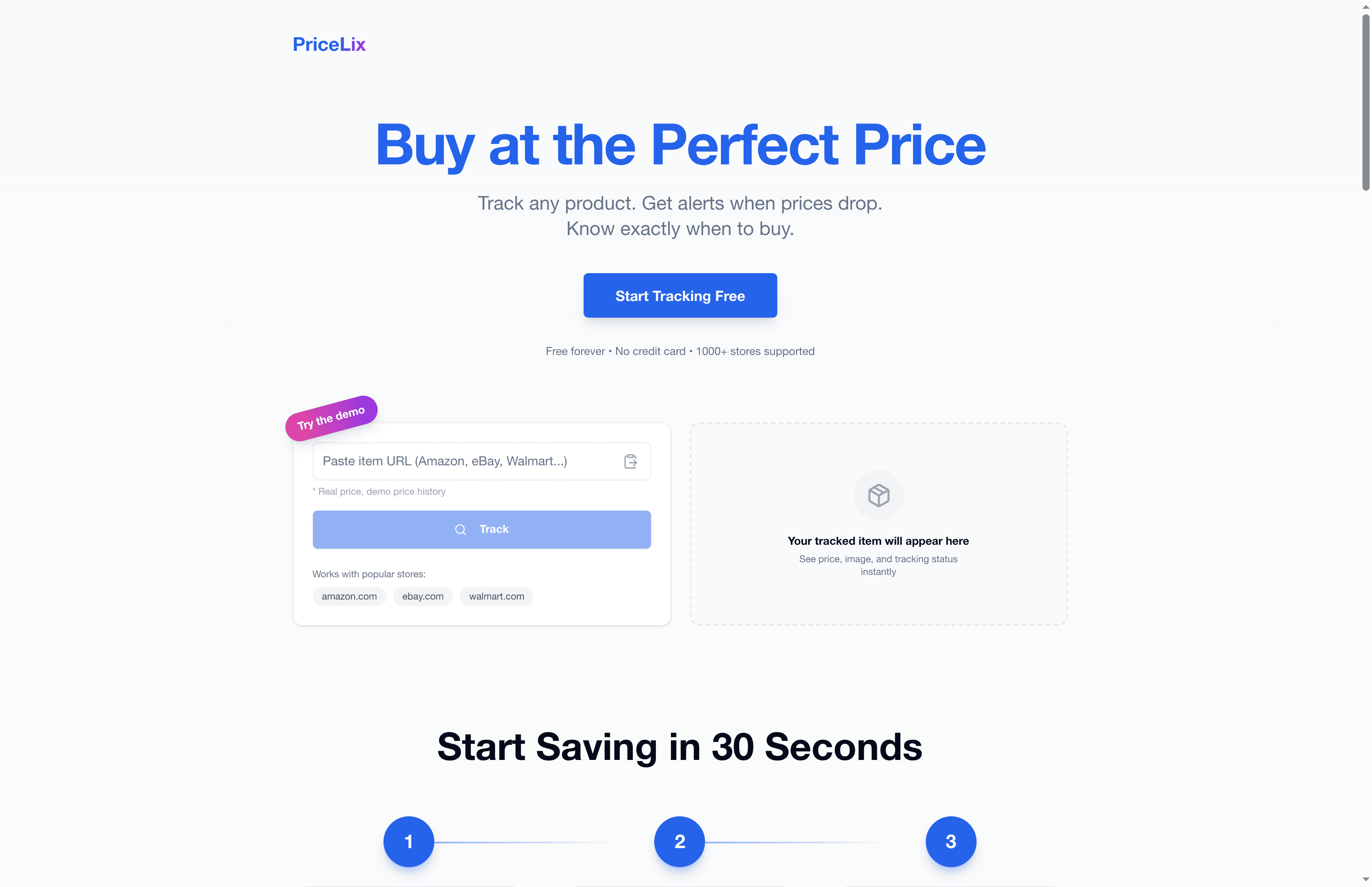
Discover PriceLix, a platform built specifically for shoppers who are tired of overpaying. PriceLix automatically tracks prices across Amazon, eBay, Walmart, and over a thousand other stores. You get real-time alerts when prices drop, detailed price history charts to verify genuine deals, and a dashboard that keeps everything organized without needing browser extensions. Whether you’re targeting Black Friday or a quiet midweek sale, PriceLix does the monitoring so you can buy with confidence. It’s the smartest tool to make everything in this guide work on autopilot.
Frequently asked questions
What is the main goal of deal hunting?
The main goal of deal hunting is to find the best possible price or offer before making a purchase, saving you real money on every transaction.
Can deal hunting be done quickly, or does it take a lot of time?
With the right tools, deal hunting can take just a few minutes. Browser extensions and apps can instantly surface hidden discounts without requiring hours of manual searching.
What types of deals are easiest to find online?
Flash sales, coupon codes, and seasonal discounts are the easiest to find. There are seven main deal types every shopper should recognize to shop more effectively.
What’s the difference between deal hunting and coupon clipping?
Deal hunting covers a much wider range of strategies than coupon clipping. It includes researching, comparing, and timing purchases, not just applying discount codes at checkout.
Recommended
- Bargain hunting strategies to save more online | PriceLix
- 10 must-have tools for deal hunters: save more every purchase | PriceLix
- Guide to finding best deals: smart strategies for 2026 | PriceLix
- Master the workflow for finding best deals: expert guide | PriceLix
- Get Smart About Your Money With These Personal Finance Tips | Credit Rebooter
- How to reduce dental bills: smart savings for your smile – Scandi Gum