
Master the workflow for finding best deals: expert guide
TL;DR:
- Retailers often inflate prices to make discounts seem more substantial, leading to overspending.
- Successful deal hunting requires tools, routines, skepticism, and verifying total costs beyond just the sticker price.
- Building disciplined habits and using price tracking tools like PriceLix significantly increases genuine savings.
You spot a “50% off” banner, your pulse quickens, and you click buy before thinking twice. Sound familiar? Here’s the uncomfortable truth: most of those banners are theater. Retailers inflate the original price, slap a discount on it, and let urgency do the rest. The result? You’re bleeding money without realizing it. This guide is here to fix that. We’ll walk you through a proven, repeatable workflow for finding genuine deals online, covering the tools you need, the steps to follow, the traps to dodge, and the mindset that separates consistent savers from impulsive buyers.
Table of Contents
- What you need to start: Tools and mindset
- Step-by-step workflow for finding the best deals
- Verification and advanced tactics: Separating the real deals from the hype
- Common mistakes and troubleshooting
- Our expert take: What deal hunters really need to know
- Take your savings to the next level with PriceLix
- Frequently asked questions
Key Takeaways
| Point | Details |
|---|---|
| Use tracking tools | Automated trackers and browser extensions help you spot genuine price drops instead of relying on luck. |
| Always compare prices | Checking multiple retailers for every purchase prevents overpaying due to hidden price spreads. |
| Validate with price history | Reviewing past prices ensures that the advertised discount is actually the lowest available. |
| Stack multiple savings | Combine coupons, cashback, and credit cards for the maximum possible discount on every order. |
| Beware fake deals | Always check MSRP and deal history to avoid falling for inflated or misleading discount claims. |
What you need to start: Tools and mindset
Before you can find real deals, you need the right gear and the right headspace. Think of it like going fishing. You wouldn’t show up without a rod, bait, and some patience. Deal hunting works the same way.
The essential tools
Here’s what belongs in your toolkit, according to best-in-class trackers recommended by deal experts:
- Price trackers: CamelCamelCamel and Keepa for Amazon, and PriceLix for tracking across a thousand-plus stores. These show you price history so you know if today’s price is actually a low.
- Browser extensions: Honey automatically applies coupon codes at checkout. Keepa overlays price history graphs directly on Amazon product pages.
- Deal communities: Slickdeals aggregates user-submitted deals with community voting, so junk gets filtered out fast.
- Vetted review sources: Wirecutter deal recommendations and Consumer Reports help you confirm that a product is actually worth buying before you track its price.
You can explore a deeper breakdown of the must-have tools for deal hunters to build your full setup.
The mindset shift that changes everything
Tools alone won’t save you money. Plenty of people have Honey installed and still overpay. The real edge comes from being skeptical and process-driven rather than reactive.
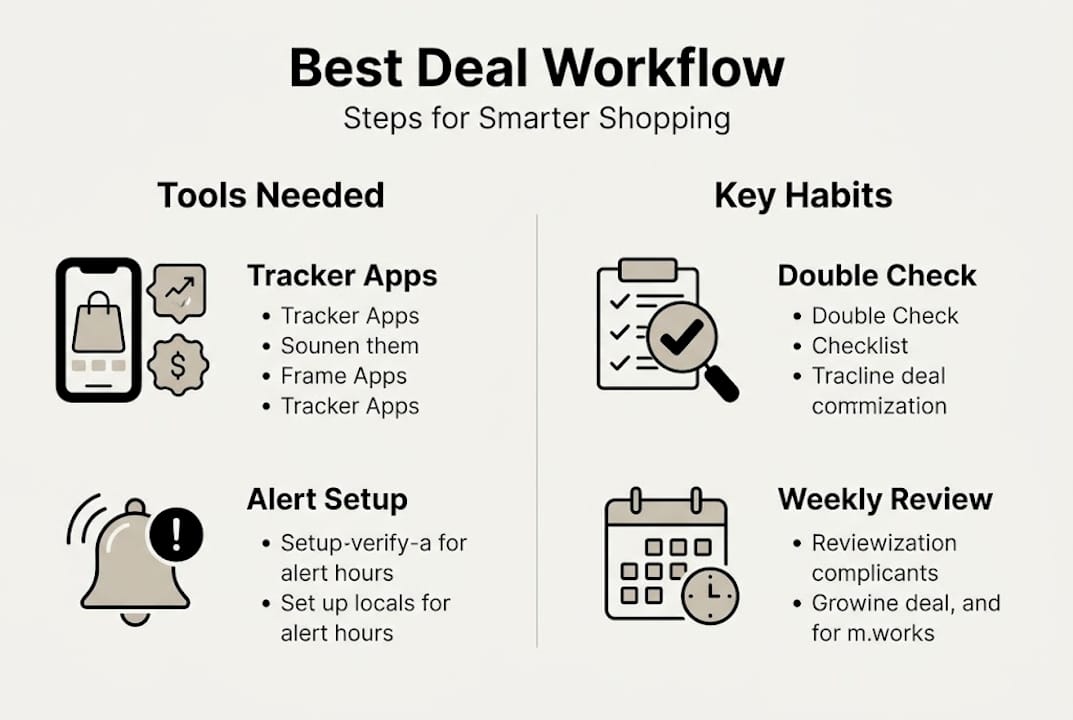
Impulsive shoppers see a deal and buy. Smart shoppers see a deal and verify. That one habit is worth more than any browser extension.
A proactive tracking routine beats passive browsing every single time. Here’s a simple 20-minute weekly routine that keeps you ahead without consuming your life:
| Task | Time needed | Tool to use |
|---|---|---|
| Check price drop alerts | 5 minutes | PriceLix, Keepa |
| Review tracked item history | 5 minutes | CamelCamelCamel |
| Scan community deal boards | 5 minutes | Slickdeals |
| Verify return and shipping policies | 5 minutes | Retailer site |
Pro Tip: Set your alerts before you need a product. The best deals go to people who are already watching, not people who start searching the day they decide to buy.
Building this routine into your week means you’re never starting from zero. You’re always one alert away from a genuine low price, not a manufactured one.
Step-by-step workflow for finding the best deals
Now that you’re equipped, here’s how the process works in action. Follow these steps every time you’re hunting for a deal, and you’ll stop guessing and start knowing.
-
Compare prices across at least three retailers. Never buy from the first store you find. Use price tracking tools to pull prices from Amazon, Walmart, Target, and others simultaneously. Skipping this step leaves real money on the table: not comparing prices costs shoppers an average of $36 on a $200 product, an 18% spread you’re handing over for no reason.
-
Check the price history. A price tracker shows you a chart of what the item has sold for over the past 90 to 365 days. This chart becomes gold when you’re trying to verify if today’s price is a genuine low or just a return to normal after an artificial spike.
-
Set a target price alert. Don’t buy yet if the price isn’t at a true low. Set an alert for your target price and walk away. This is where patience pays off. Time your purchase around predictable sales cycles, like Black Friday for electronics or January for fitness gear.
-
Stack your savings. Once the price hits your target, layer on every discount you can. Apply coupon codes through Honey, activate cashback through a portal like Rakuten, and pay with a credit card that offers purchase rewards. Each layer adds up.
-
Verify the MSRP. The manufacturer’s suggested retail price (MSRP) is the baseline. Retailers sometimes inflate their “original” price above MSRP to make discounts look bigger. A core deal-finding workflow always includes an MSRP check as a final sanity test.
Savings comparison: Workflow vs. impulse buying
| Approach | Average savings on $200 item | Time invested |
|---|---|---|
| Impulse buy (first store) | $0 | 2 minutes |
| Basic comparison (2 stores) | $15 to $20 | 10 minutes |
| Full workflow (5 steps above) | $36 or more | 20 minutes |
Twenty minutes of effort for $36 in savings. That math is hard to argue with.

Verification and advanced tactics: Separating the real deals from the hype
After following the workflow, here’s how to ensure you maximize savings and don’t fall for traps.
Verify total cost, not just sticker price
A lower product price means nothing if shipping costs $15 or returns cost $10. Always calculate the all-in price before celebrating. Price protection and price match policies are also worth checking. Some retailers will refund the difference if the price drops after you buy, which is essentially free insurance.
Watch out for dynamic pricing
This one surprises a lot of shoppers. Dynamic pricing means a retailer’s algorithm adjusts prices in real time based on demand, your browsing history, and even your device. A price you see on mobile might differ from the desktop price for the same item. Check both.
“Dynamic pricing can change hourly. If you see a great price, don’t sleep on it. Set the alert, confirm the history, and act when you’re ready.” — Smart Shopping Playbook 2026
Advanced moves worth knowing
- Price matching: Many big retailers (Best Buy, Target, Walmart) will match a competitor’s lower price if you ask. Always worth a quick check before checkout.
- Certified refurbished products: Buying refurbished from manufacturer-certified sellers, like Apple Certified Refurbished or Dell Outlet, can save 20 to 40% with full warranty coverage. Only buy refurbished from certified sources, not random third-party listings.
- Seasonal timing: Appliances tend to drop in November, mattresses around holidays, and TVs before the Super Bowl. Understanding online deals and seasonal cycles helps you plan purchases months in advance.
Spot fake discounts fast
Here’s what to look for when a deal feels off:
- The “original” price is higher than the MSRP
- The discount appeared overnight with no price history to support it
- The listing shows “only 2 left” with a countdown timer
- Community-verified deal sites like Slickdeals have no mention of the product
Pro Tip: If a deal isn’t showing up on community boards and the price history doesn’t support the claimed discount, trust your gut and walk away.
Common mistakes and troubleshooting
Even the best shoppers can stumble. Here are the most common missteps and how to handle them.
-
Buying only from your favorite retailer. Loyalty is costing you money. Bargain hunting strategies consistently show that prices vary significantly across platforms. Amazon isn’t always cheapest. Neither is Walmart. The only way to know is to compare.
-
Panic buying during “limited time” offers. Artificial urgency is one of retail’s oldest tricks. Countdown timers and “only 3 left” messages are designed to short-circuit your decision process. If the price is genuinely good, the history will confirm it. If not, the urgency is the red flag.
-
Forgetting to calculate total cost. A $10 saving on the product price evaporates if shipping adds $12. Always factor in shipping, handling, and potential return fees before you decide. Stacking discounts (coupon plus cashback plus card rewards) only works if the base price is actually competitive.
-
Skipping the second opinion. Community deal sites are efficient precisely because thousands of shoppers vet deals before you see them. If a deal is real, it usually shows up there. Over-relying on a single retailer’s claims without checking community boards is one of the most common and costly mistakes shoppers make.
-
Not monitoring seasonal patterns. Some of the best savings are entirely predictable if you know when to look. Monitoring seasonal sales and planning purchases around those windows can save you more than any individual coupon code ever will.
-
Setting alerts too late. Most shoppers start tracking a product after they’ve already decided they want it urgently. By then, you’re at the mercy of whatever the current price is. Start tracking early, before urgency sets in.
Our expert take: What deal hunters really need to know
Here’s something most guides won’t tell you: the tool doesn’t matter as much as the habit.
We see a new “best deal-finding app” go viral every few months. Shoppers rush to install it, use it twice, and go back to impulse buying. The tool was fine. The routine wasn’t there.
The shoppers who consistently save the most aren’t the ones chasing every flash sale. They’re the ones who set alerts weeks in advance, check price history before every purchase, and treat skepticism as a feature, not a personality flaw. That disciplined process, not any single hack, is what actually moves the needle.
There are seven distinct types of online price tracking available today, from browser-based tools to dedicated platforms. The right one for you is whichever one you’ll actually use consistently. Pick one, build the habit, and let the savings compound over time. Mindset plus routine beats any shortcut.
Take your savings to the next level with PriceLix
Ready to make this workflow effortless?
PriceLix automates the heavy lifting described in every step above. It tracks prices across Amazon, eBay, Walmart, and over a thousand other stores, sends you real-time alerts when your target price is hit, and shows you detailed price history charts so you always know if a deal is real.
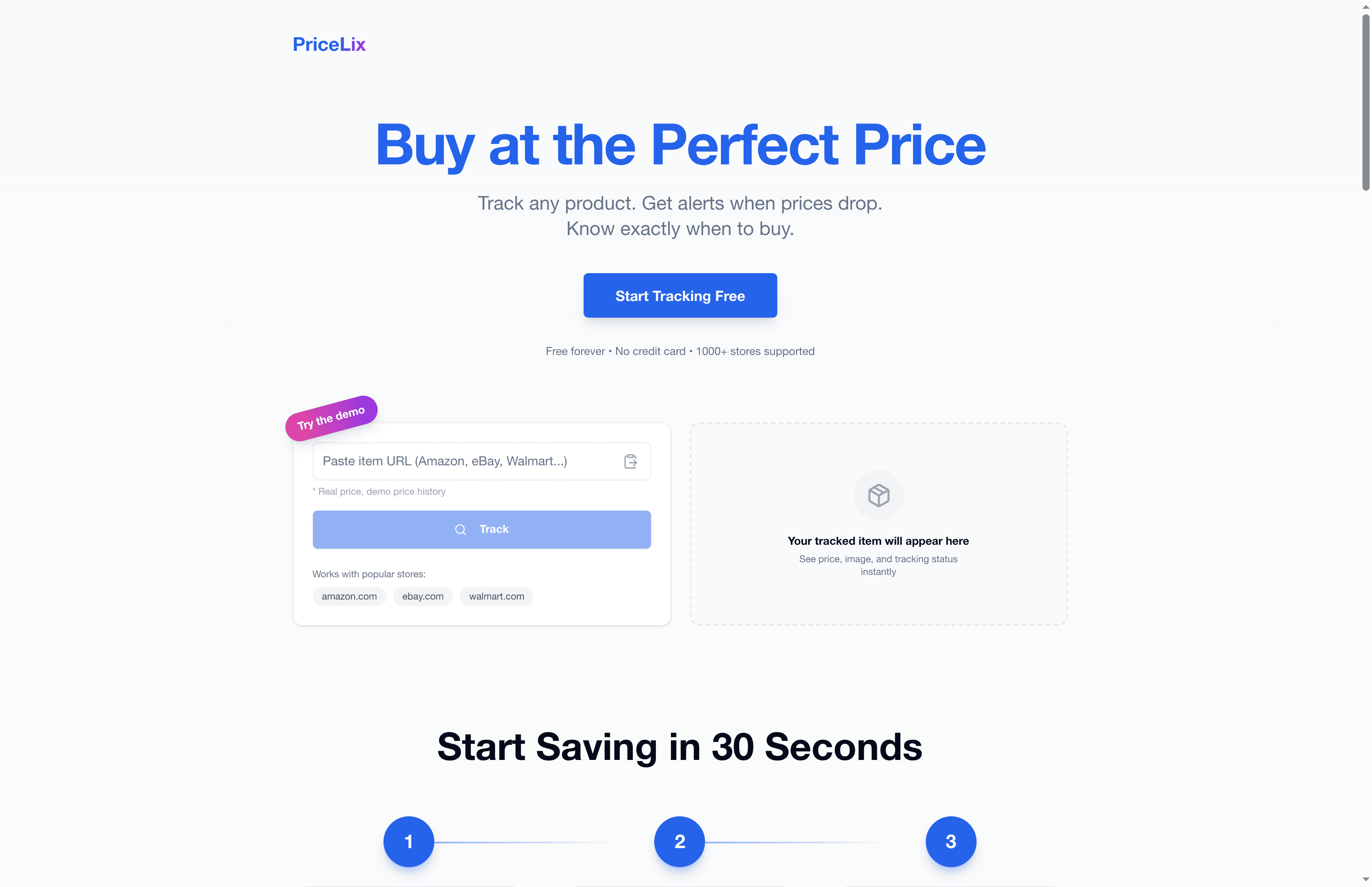
No browser extension required. No manual checking. Just set your target, let PriceLix watch, and act when the moment is right. You can also explore seasonal pricing trends for 2026 directly on the blog to plan your biggest purchases around the best windows of the year. Smarter shopping starts here.
Frequently asked questions
What’s the best tool for tracking prices automatically?
Price trackers like Keepa and CamelCamelCamel automate price monitoring on Amazon and alert you to drops, while PriceLix covers a broader range of retailers in one dashboard.
How do I know if a deal is real or fake?
Check the price history chart and compare the listed price to the actual MSRP. Inflated original prices are the most common tactic retailers use to manufacture fake discounts.
Are community deals on sites like Slickdeals trustworthy?
Most are user-verified and reliable, but always cross-check with price history before buying. Slickdeals verifies 91% of deals with a median scan time of 8.3 seconds, making it one of the faster community vetting systems available.
How does dynamic pricing affect deal hunting?
Dynamic pricing shifts hourly based on demand and user data, and prices can differ between mobile and desktop. Set an alert the moment you spot a good price so you don’t lose it.
Should I wait for sales or buy when I see a good price?
Use price history to confirm the current price is a genuine low, then set an alert for your target. Timing purchases around sales cycles like seasonal events often yields the best results for planned purchases.
Recommended
- Guide to finding best deals: smart strategies for 2026 | PriceLix
- How to compare deals online: smart shopping for better savings | PriceLix
- 10 must-have tools for deal hunters: save more every purchase | PriceLix
- Guide to monitoring deals: save smart in 2026 | PriceLix
- Fashion Shopping Workflow 2026: 25% Faster, 30% Fewer Returns – 16th Avenue