
How Dynamic Deal Chasing Helps You Save More Online
TL;DR:
- Dynamic deal chasing uses automated tools to monitor fluctuating online prices and notify shoppers instantly when a target deal is available.
- It outperforms traditional methods by providing real-time alerts, reducing time spent manually checking, and leveraging dynamic pricing systems.
- Implementing this workflow helps shoppers effectively save money by validating deals through price history and total cost considerations before purchasing.
You add an item to your cart, wait a few days, and when you finally check out, the price jumped $40. Sound familiar? That moment of frustration is exactly why dynamic deal chasing exists. It means using automated tools to monitor price changes in real time, set target prices, and get notified the instant a deal hits your number. Instead of guessing or refreshing product pages manually, you let smart technology do the watching for you. This guide breaks down exactly how it works, why it beats traditional deal hunting, and how you can start saving more on every purchase.
Table of Contents
- What is dynamic deal chasing?
- Why prices change: The impact of dynamic pricing
- How dynamic deal chasing technologies work
- Avoiding false bargains: Steps for smarter decision-making
- Put it into action: Building your dynamic deal chasing workflow
- Perspective: Why most shoppers miss out on dynamic deals and how to fix it
- Start saving smarter with PriceLix
- Frequently asked questions
Key Takeaways
| Point | Details |
|---|---|
| Automate to save more | Price tracking tools automate deal discovery so you never miss short-lived bargains online. |
| Factor in total cost | True deals include shipping, membership fees, and coupons—always check the full price, not just the base item. |
| Compare with price history | Before acting, always compare today’s deal to past prices to avoid falling for false discounts. |
| Act on timely alerts | Move quickly when alerts trigger, as good deals often disappear within hours under dynamic pricing systems. |
| Establish a repeatable workflow | Following a consistent dynamic deal chasing process helps maximize your savings over time. |
What is dynamic deal chasing?
Dynamic deal chasing is not just a buzzword. It grew out of the frustration that regular shoppers feel when they realize that prices online shift constantly, sometimes multiple times in a single day. The term blends two ideas: dynamic, meaning fast-moving and frequently changing, and deal chasing, meaning you are actively pursuing the best possible price rather than just hoping to get lucky.
Here is how it differs from regular deal hunting. Traditional deal hunting is passive. You scroll through a deals forum, check a retailer’s homepage on Black Friday, or wait for an email newsletter. Dynamic deal chasing flips that completely. You set your target price, add the product to a watchlist, and automation handles the rest.
“Dynamic deal chasing involves using automated, continuously updated signals to act the moment an item meets your criteria.” Capital One Shopping
The core practices that define this approach include:
- Setting a target price before you buy, based on what you consider fair value
- Adding products to watchlists inside a price tracking tool
- Automating alerts so you get an email or push notification when prices drop
- Acting quickly because good deals often disappear within hours
One of the biggest advantages is that you no longer need to refresh product pages or manually check prices every morning. Understanding what is a price alert is a great starting point if you are new to this concept. Automation and timely notifications transform deal hunting from a time-consuming hobby into a lean, efficient savings strategy.
Why prices change: The impact of dynamic pricing
With the concept defined, the next question is: why do prices shift so often in the first place?
Online retailers use something called dynamic pricing, which is an automated system that adjusts prices based on demand, competition, inventory levels, time of day, and even your browsing history. A product you viewed on Tuesday morning might cost 15% more by Tuesday evening simply because demand spiked. There is also surveillance pricing, a more targeted form where retailers use data about your shopping behavior to show you personalized prices.
Here is a quick comparison of static versus dynamic pricing and how each affects you as a shopper:
| Factor | Static pricing | Dynamic pricing |
|---|---|---|
| Price at 8 AM | $89.99 | $89.99 |
| Price at 6 PM | $89.99 | $104.99 |
| Sale availability | Fixed, predictable | Unpredictable, short-lived |
| Shopper outcome (no tracking) | Pays fair price | May overpay by 10-20% |
| Shopper outcome (with alerts) | No advantage needed | Catches lowest price automatically |
The numbers are real. Prices and availability change quickly, making automation far more effective than manual checking. If you are browsing without a tracking tool, you are essentially shopping blind.
The risk of assuming today’s sale price is the lowest is significant. A product marked “20% off” might have been at that exact same price three weeks ago without any sale banner attached. That is why combining alerts with solid best price tracking strategies gives you a real edge. You stop relying on what a retailer tells you and start relying on verified price data instead.
How dynamic deal chasing technologies work
It is clear that automated tools are vital, but how do these technologies actually help you win at the deal game?
The process follows four clear steps:
- Select your product. Find the specific item you want across one or multiple retailers. Be as specific as possible, including the exact model or SKU, so your alerts are accurate.
- Set a target price. Decide the maximum you are willing to pay. A good benchmark is 10-15% below the current listed price or at the historical average, whichever is lower.
- Choose and set up your tool. Sign up for a price tracking platform, paste in the product URL, and configure your alert settings. Check out this guide to price alerts setup if you want a detailed walkthrough.
- Act on your alert. When the notification arrives, verify the deal quickly and complete your purchase before the price moves again.
Here is how different approaches compare:
| Method | Time required daily | Accuracy | Alert speed | Works across stores |
|---|---|---|---|---|
| Manual checking | 15-30 minutes | Low (human error) | None | No |
| Browser extension | Minimal | Medium | Medium | Limited |
| Dedicated platform | Near zero | High | Real-time | Yes (1,000+ stores) |
Shoppers set watchlists and price targets, and tools monitor prices and notify when conditions are met. The best platforms also let you customize alert thresholds, target specific retailers, and filter by product categories.
Pro Tip: When you set up price alerts, always factor in total cost including shipping and applicable membership fees. A product listed $10 cheaper might cost more overall after a $15 shipping charge is added. Set your target price based on what you will actually pay at checkout, not just the item’s sticker price.
Another useful feature in advanced tools is the ability to track price trends over weeks or months. When you see a price history chart showing that an item typically drops 20% during late November, that chart becomes gold for planning your purchase timing. Explore deal alert tools to find the right fit for your shopping habits.
Avoiding false bargains: Steps for smarter decision-making
Even with the right tech, mistakes can be costly. Let us talk about how to spot and avoid the most common traps.

The biggest pitfall is falling for flash sales that are not actually deals. A retailer might inflate a product’s “original” price so that a moderate discount looks dramatic. Without price history data, you would never know. False discounts where the sale price is not meaningfully better than historical norms are a well-documented trap, and matching alert logic to the real total price is essential to avoiding them.
Other common mistakes include:
- Ignoring total cost. Shipping fees, return restrictions, and loyalty memberships can flip a “deal” into a loss.
- Skipping price history. An item on sale for $59 might have been $49 last month. Without context, you are celebrating a false win.
- Reacting to urgency. Countdown timers and “only 3 left” messages are designed to pressure you into quick decisions without research.
- Single-store thinking. Checking only one retailer means you miss better prices elsewhere.
Here are the validation steps you should run before acting on any alert:
- Cross-check the deal against the product’s full price history (30-90 days minimum)
- Confirm the alert includes total cost, not just the item price
- Verify the discount is at least 10-15% below the historical average to count as meaningful
- Check competing retailers to ensure you are seeing the market’s best price
Pro Tip: Set up alerts at three or more retailers for the same product. When you see price movement at one store, check the others immediately. Retailers often match or undercut each other within hours, and tracking multiple sources reveals patterns you would otherwise miss. A solid price tracking workflow makes this routine rather than stressful.
Developing discipline around these steps takes practice but pays off fast. Use automation for savings to remove emotion from the equation and let data guide your decisions.
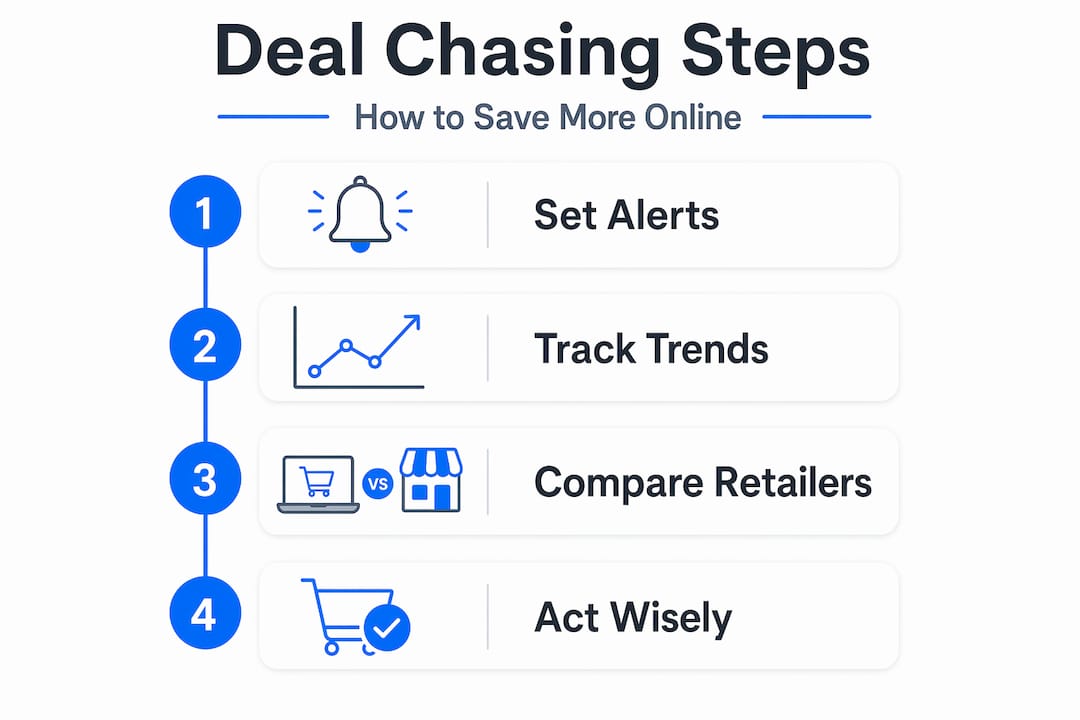
Put it into action: Building your dynamic deal chasing workflow
Having covered the pitfalls, let us put it all together so you can win at dynamic deal chasing from your next purchase onward.
Here is a step-by-step workflow you can follow immediately:
- Pick your product. Be specific. Search for the exact model, color, and size you want.
- Research its price history. Look at 60-90 days of price data to understand what “normal” and “low” actually look like for that item.
- Set a smart target price. Aim for the historical low or 15% below the current price, whichever gives you the better deal.
- Choose your alert tool. Set up an account on a price tracking platform and paste in your product’s URL. Configure alerts for your target price.
- Include total cost. Adjust your target price to account for shipping, taxes, and any required memberships.
- Validate the deal when the alert fires. Run through the quick checklist: price history check, total cost review, competitor price comparison.
- Confirm and purchase. Once you have validated the deal, act quickly. Good prices do not last long under dynamic pricing conditions.
Setting target prices, using alerts, and validating deals against price history is the proven formula for consistent savings.
For ongoing success, keep these best practices in your routine:
- Review your watchlist monthly and remove items you no longer need
- Adjust target prices when historical data shifts significantly
- Use your price tracker’s category features to discover deals on similar products
- Never purchase immediately after a price spike, even if it drops slightly
- Bookmark your price tracking checklist for reference before every major purchase
The habit of monitoring discounts systematically is what separates shoppers who save consistently from those who only get lucky occasionally.
Perspective: Why most shoppers miss out on dynamic deals and how to fix it
Here is something that does not get said enough: having access to good tools is not the same as using them well. Most shoppers who discover price tracking try it once or twice and then drift back to old habits. The tools are there. The savings are real. But something gets in the way, and it is almost always psychology.
The first culprit is urgency bias. Retailers are masters at creating artificial pressure. A countdown timer, a “deal ends tonight” banner, or a limited stock warning triggers a fear of missing out that overrides rational thinking. Shoppers skip the price history check, ignore the shipping cost, and buy immediately because it feels like a deal. The house always wins when you play by their rules.
The second problem is sale fatigue. After seeing endless “50% off” promotions, shoppers start to either dismiss all sales or blindly trust all of them. Neither response is smart. Assuming a flash sale is a true bargain without checking historical context is one of the highest-risk mistakes a shopper can make.
The real fix is automation combined with a deliberate mindset shift. When you let a price tracker handle the monitoring and you commit to validating deals before acting, you remove both urgency bias and guesswork from the process. You stop reacting emotionally and start responding strategically. That shift is worth more than any single coupon or flash sale.
Understanding the price alert benefits that informed shoppers use gives you a concrete framework for this mindset. Data replaces gut feeling. History replaces hype. And over time, the savings compound in ways that passive deal hunters never experience.
Start saving smarter with PriceLix
If this guide lit a fire under you, good. Now channel that energy into action. PriceLix is built specifically for shoppers who want to stop overpaying and start buying at the right moment. With real-time price alerts, detailed price history charts going back months, and automatic daily tracking across more than a thousand stores including Amazon, eBay, and Walmart, PriceLix does the heavy lifting so you do not have to.
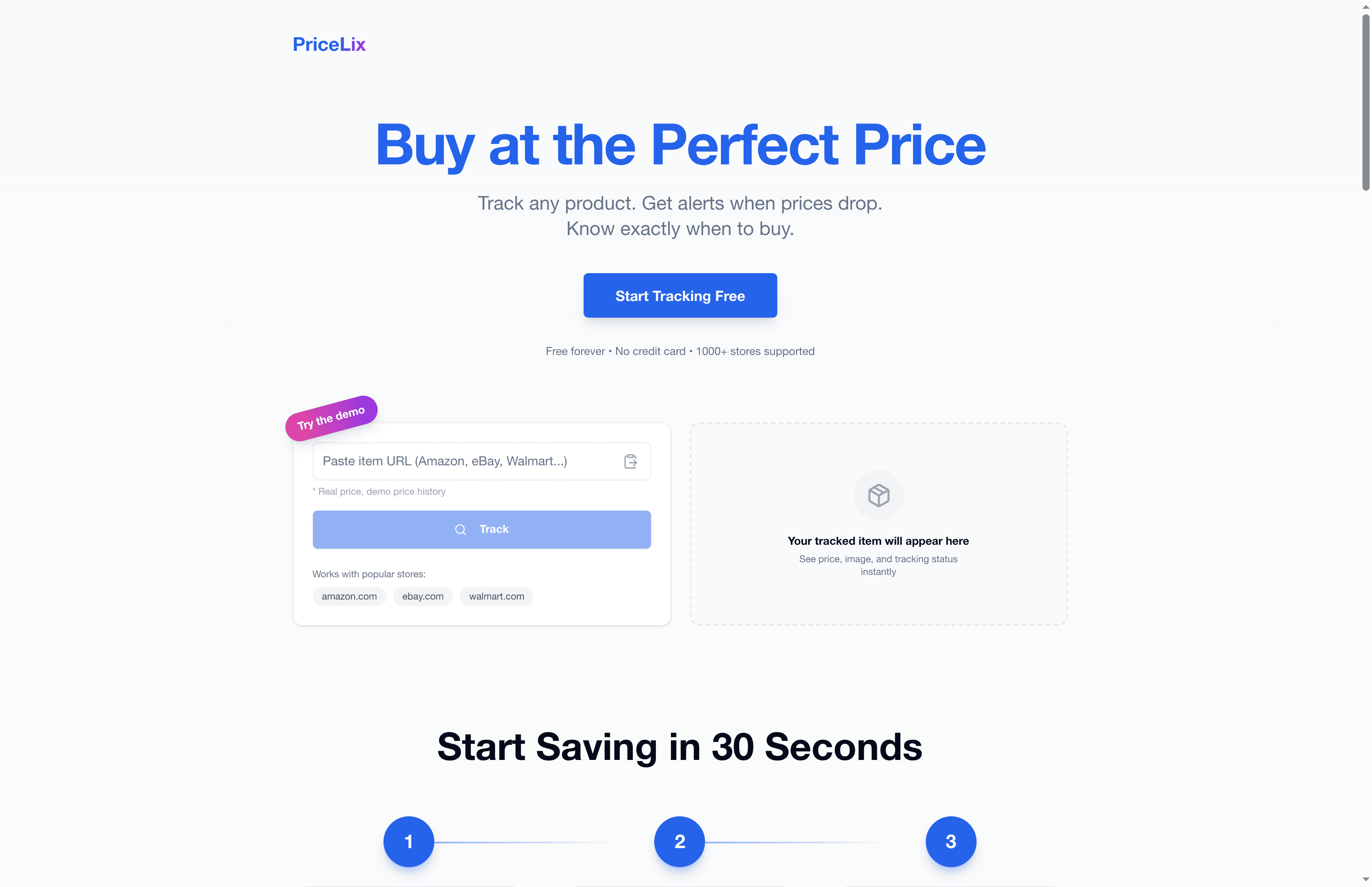
Setting up your first alert takes less than a minute. No browser extension required, no complicated setup. Just paste a product URL, set your target price, and let PriceLix watch it for you. Whether you are tracking a single item or building a full watchlist for an upcoming holiday haul, the platform keeps everything organized in one clean dashboard. Head to PriceLix and start your first tracked product today. Real savings start the moment you stop guessing.
Frequently asked questions
Is dynamic deal chasing safe to use?
Yes, using automated price alerts from trusted services is safe, provided you protect your account credentials and only shop on secure, reputable websites.
How do I know if a deal is real or just a flash sale?
Check the product’s full price history to see if the sale price is genuinely lower than recent averages. Historical context matters because flash sales often mirror regular prices with a new label attached.
Which tools are best for dynamic deal chasing?
Top options include dedicated price tracking platforms, browser extensions, and mobile apps that send real-time alerts. Tools monitor prices automatically and notify you the moment your target price is reached.
Do I need to check prices manually every day?
No. Automation makes manual checking unnecessary because price tracking tools monitor products around the clock and alert you only when something worth acting on happens.
What makes dynamic deal chasing better than regular deal hunting?
Regular deal hunting is reactive and unreliable. Dynamic deal chasing uses automation and live data so you can act instantly. The actionable window for a bargain can appear and disappear within hours, and automation ensures you never miss it.